

Bird of the Week: Emu
How have we not done this one before?!?!?!


OK, picture this. You’re hanging out in Curtin Springs, Australia, as one does. You’re just chilling—well, not literally, since you are, in fact, in the desert, but you know what I mean. You realize you need to fill up the tank. Luckily, Unigas, Australia’s largest provider of Liquefied Petroleum Gases, is right there. Thanks, Unigas! So you’re sitting there, and all of a sudden, this happens:
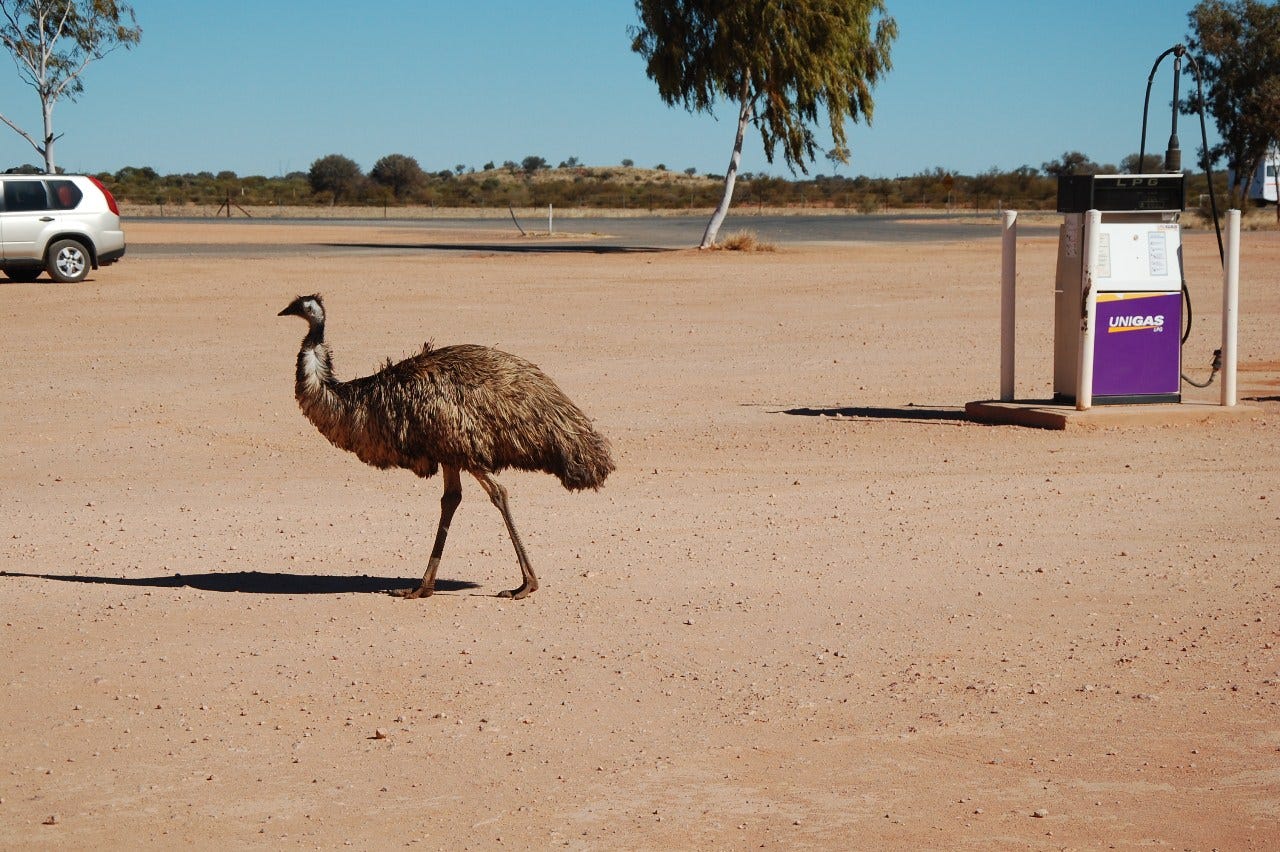
Hooooooooooooolllllllllllyyyyyyyyyyyyyyy moly. What in the what in the what!!!!!!!!!!!! YOU JUST GOT EMU’D.
That’s right: in this edition of Bird of the Week, we’re talking about a bird that I can’t believe we’ve never done before: the one, the only, the emu.
You know emus! The second-biggest bird in the known universe? A bird that I would be both thrilled and scared to be near? The creature that screams Australia so much that it’s on the coat of arms, and should probably be on the flag instead of that dumb Union Jack?
Oh, you don’t believe me? Here’s the current flag:

Now look at this version I definitely took more than three seconds to whip up:

I know. They really should consult me on this stuff.
Now that your jaw is back off the floor (sorry to dazzle you with my graphic design skills so early on) let’s get into some emu facts.
FACT: Emus are huge, topping out at an average height of 5 feet 7 inches. For all you trivia nerds out there, that is two inches taller than me, Jack Mirkinson.
FACT: Emus are both regal and surprisingly cute. Look!
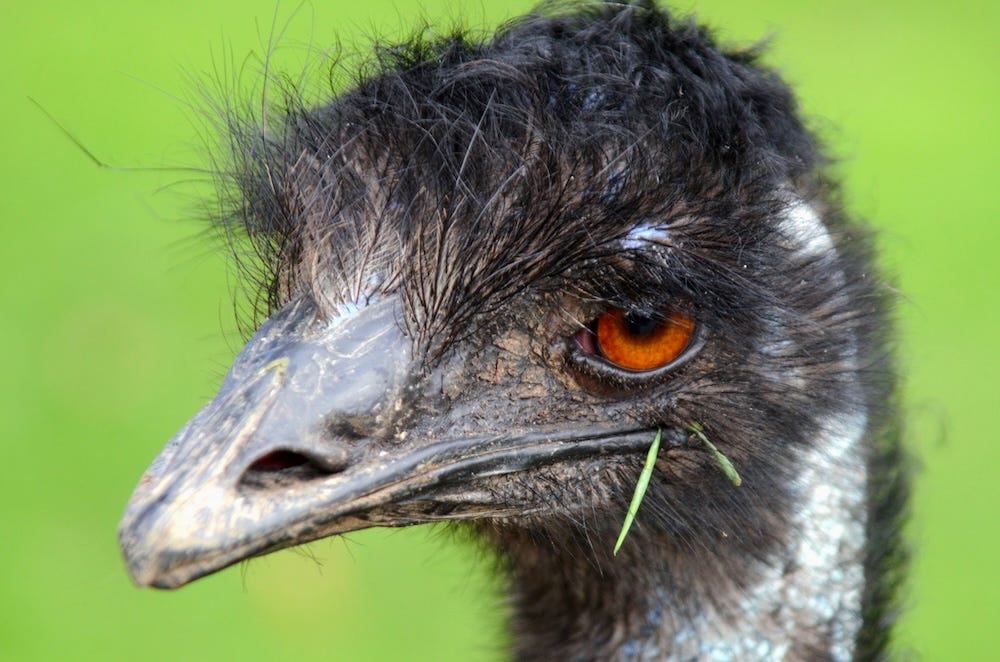
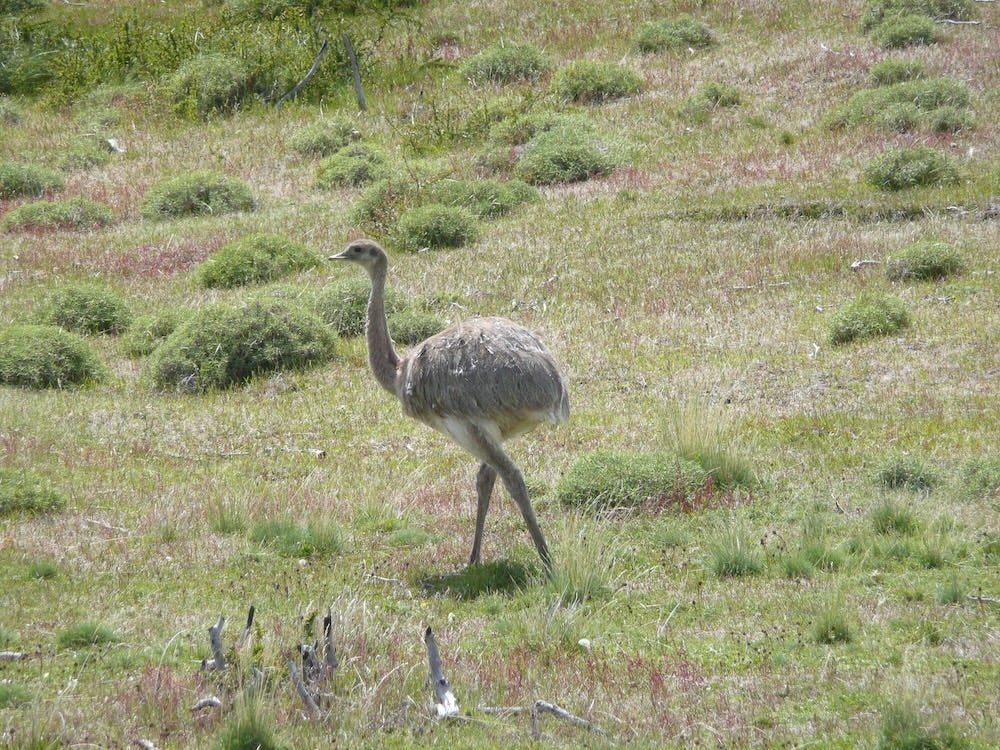
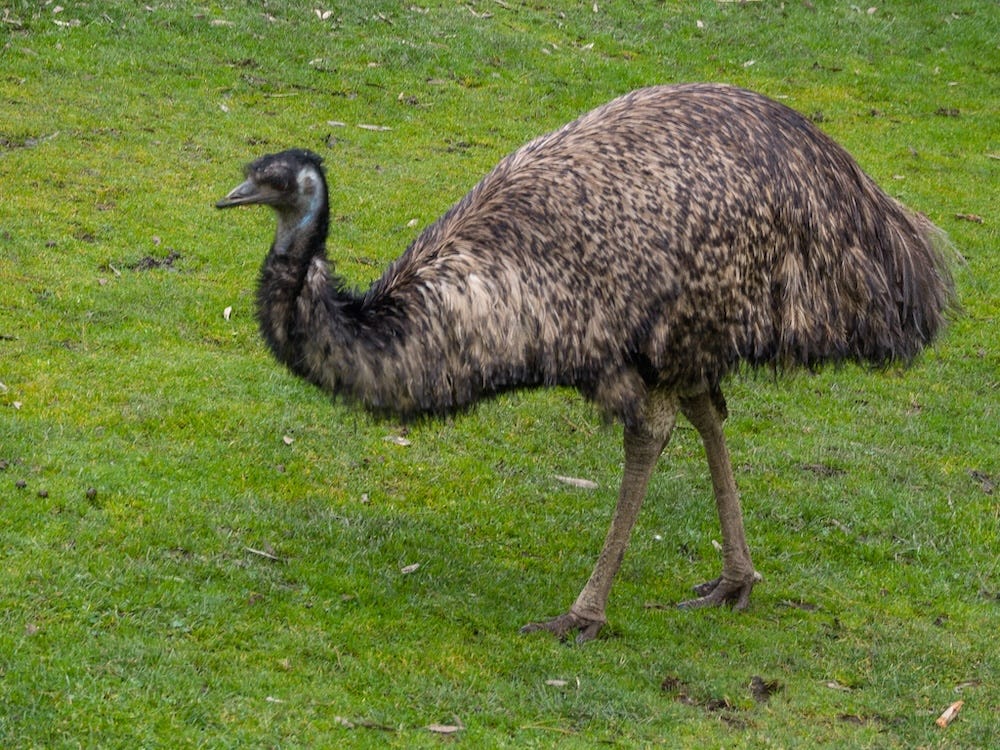
FACT: You will only find them in Australia, home to a dizzying proportion of the world’s most iconic freak creatures. (Complimentary.)
FACT: Emus can’t fly. They have wings, but the wings are super-tiny. Why? Because if you were the second-tallest bird in the world, and you ruled an entire continent, you wouldn’t need to fly either.
FACT: Female emus are bigger than male emus! Not by a lot, but still. And it’s the boy’s job to look after the kids, as the San Francisco Zoo explains:
Males create nests on the ground using grasses, twigs and leaves. Females lay a clutch of 5-15 greenish-blue eggs then go off to find another male; females have been known to lay up to three clutches in a single season. Males are left to incubate eggs for 48-56 days and care for chicks once they hatch. Chicks leave the nest after just a few days and are able to feed themselves almost immediately. Males look after chicks for up to 18 months although juvenile emus are full grown at 12-14 months.
Normally I wouldn’t be like “you rock! Way to not care for your offspring!” But when it comes to birds, all bets are off. We love female bird supremacy! And it’s not like the kids don’t thrive. Did you see how big they are???
FACT: Emus have an omnivorous diet. They’re eating seeds. They’re eating fruit. They’re eating little bugs. They’re doing it all.
FACT: If you ever care for an emu, you better make sure you treat them right. As the American Emu Association (yes, real) warns, “Feed your emus correctly and they will reach their genetic potential. Don’t feed them correctly and they won’t. Simple as that.” Are you going to be the person who destroys the genetic potential of the emu? How can you even live with yourself?
FACT: Emus cannot walk backwards. According to this primer from the Victoria state government, “The Emu and Kangaroo are on Australia’s Coat of Arms. It is thought they were chosen as they are the only two Australian animals that can’t move backwards. The Coat of Arms therefore symbolises a nation moving forward.” Crazy. Except…
FACT: Maybe they can walk backwards??? Here’s someone named Dr. N Hawthorne complaining to the Daily Mail:
There is a widespread myth that kangaroos and emus can’t walk backwards. It’s claimed that kangaroos’ L-shaped legs, designed for jumping, won’t move in this way and that their large, thick tails get in the way. In the case of emus, it’s their three-toed feet and unique leg musculature that supposedly prevent backwards locomotion. Anyone who has witnessed a kangaroo fight will know they are quite agile when standing on tiptoe and can move forwards and on tiptoe, backwards as well as laterally. Emus can edge backwards when threatened.
Am I going to investigate this further? No.
And the last, most important FACT: Emus can run faster than Usain Bolt. Look at this.
And this:
And this, which also contains helpful info about why they run the way they do:
Amazing. EMUS! What’s not to love???
A reminder: you can check out our complete Bird of the Week list here, and get in touch with your bird suggestions at hello@discourseblog.com.
How did emus get to Australia in the first place? Are they distant cousins of ostriches or did they evolve separately from ostriches? If they are related to ostriches, what is the common ancestor?
You cannot write about the emu without acknowledging the comedic brilliance of Rod Hull and Emu.
https://www.youtube.com/watch?v=TxAFdTCkQS0