

Bird of the Week: Scarlet Ibis
Do we really have to explain why?


It’s been a minute since we did Bird of the Week, so I thought it would be wise to return with a bang. And it’s hard to think of a bird that symbolizes “bang!” more than today’s featured fowl: the scarlet ibis.
Behold.

Well. That pretty much says it all, don’t you think? Not much more for me to do here. I’ll just pack my things and be on my way.
Kidding, kidding! But seriously—a nanosecond’s look at the scarlet ibis is all it takes to recognize this as a top-tier bird. That brilliant, blooming red! That otherworldly beak! That singular combination of gorgeous and doofy that we love at BOTW! Here’s another picture.
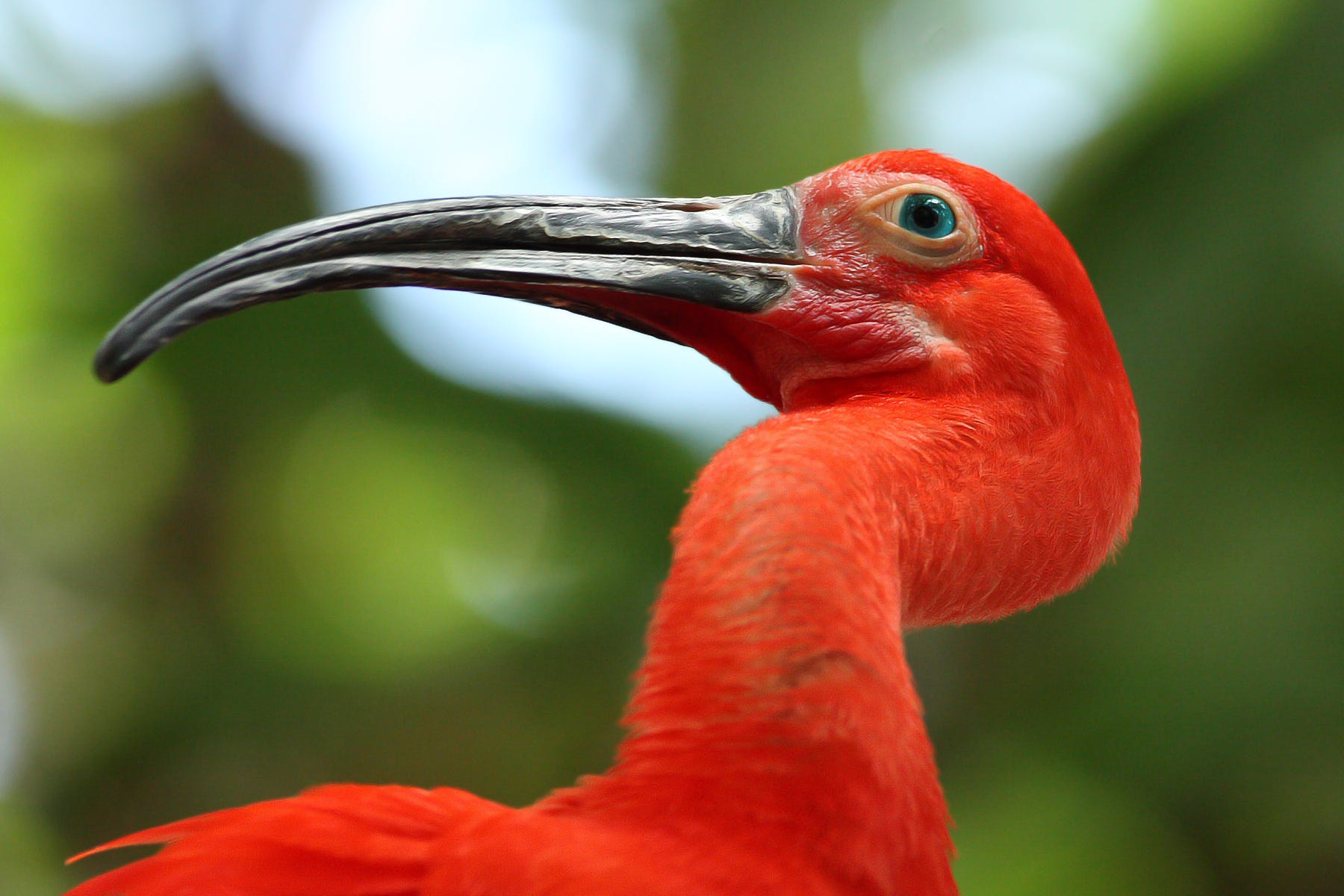
Unreal. Perfect.
Unlike many other birds, the scarlet ibis’s name is pretty easy to decipher. It’s an ibis. And boy is it scarlet. Pleasingly, both male and female scarlet ibises have this boffo socko red coloring. I guess it would be weird if the female scarlet ibis was actually, like, beige, but still—another crack in the glass ceiling!
And about that red—it happens because of the ibis’s diet. From The Guardian:
Scarlet ibises consume a diet of frogs, reptiles and crustaceans -- and it is the carotenoids within the bodies of the crustaceans that give scarlet ibises their stunning colour. The birds concentrate the carotenoids that they obtain from their diet and deposit these pigments into their feathers when they moult. The brilliant colouring helps the adults attract mates -- the brighter their colour, the more attractive they are as mates.
Carotenoids are usually discussed in the context of things like pumpkins and carrots and squash, but apparently they are also found in shrimps and lobsters and little frogs and things. I bet when other ibises see a particularly bright and bouncy fellow they start going “Ooooooh someone’s been eating a lot of carotenoids lately.” Also, those beaks are no joke. From news.com.au:
The ibis has a special ability to find food underground by detecting vibrations with their beak – a skill they inherited from their dinosaur ancestors, according to a new study.
The birds use cells hidden inside their beaks to pick up vibrations from the soil or sand that is their traditional hunting ground.
Oh, don’t mind me, I’m just finding food through vibrations I detect with my special beak cells. Come on now.
Scarlet ibises live mainly in big flocks in tropical swamps along the upper edge of South America, particularly in Venezuela and Colombia. But they also have a substantial presence in the Caribbean. They’re even a national bird of Trinidad and Tobago! Sorry bald eagle, but you’ve been outclassed. (Though, as we’ve discussed previously, the bald eagle is severely hampered by being associated with the United States.)
Scarlet ibises aren’t just lovely to look at—which, speaking of, here’s a picture of them flying.
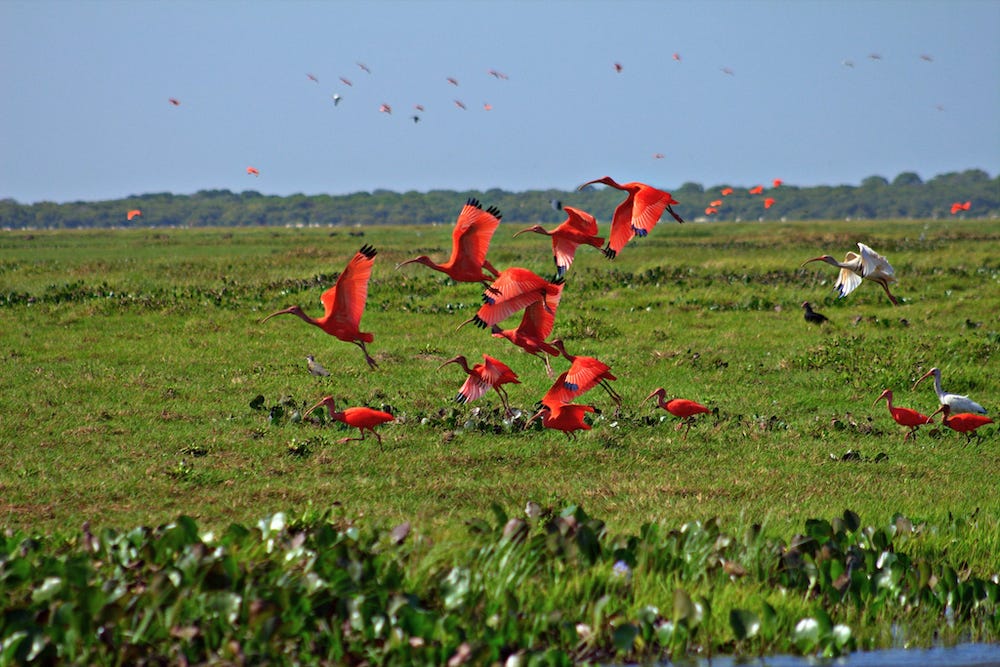
Holy cannoli! What was I saying? Oh right. Scarlet ibises aren’t just lovely to look at. They’re also—surprise surprise—important for the survival of precious swaths of our natural habitat, as One Earth explains:
The ibis' feeding habits play a crucial role in maintaining the health of coastal ecosystems. By consuming various prey that thrive in mangrove root systems, these birds help regulate prey populations and contribute to the ecological balance of their habitats.
[…]Additionally, biologists have noted that while adult ibises primarily forage in saltwater or brackish-water swamps, they often shift to freshwater marshes, rice fields, and flooded savannas when feeding their young. This ensures that the chicks receive the nutrients they need for healthy development. Thus, the scarlet ibis helps maintain the ecological balance across different environments and highlights the bird's adaptability and ecological significance.
For the millionth time in my life, I have to note the difference between so many other animals and us. The scarlet ibis helps the planet just by doing its thing and living its ibis-y life. When we do our thing, the whole world implodes. We are the stupidest species and it’s not even close.
Anyway, I hope that, long after the earth has rightfully rejected homo sapiens, the scarlet ibis will still be here, feeding on shrimp, finding things with its beak cells, and being awesome.
OK, let’s end on this video of a bunch of scarlet ibises flying through Trinidad’s Caroni Swamp, one of their most iconic homes.
Yes.
A reminder: you can check out our complete Bird of the Week list here, and get in touch with your bird suggestions at hello@discourseblog.com.