

Bird of the Week: Whooper Swan
Whooper there it is!


Here’s something we somehow have never done before on Bird of the Week: a swan.
Why have we never featured a swan? I’m really not sure. Maybe it’s because swans are fancy, and we like to think of ourselves as the bird blog of the proletariat. Or more likely because we just….never got around to it before.
Anyway. Here I am, kicking myself that it took almost half a decade for a swan to get a look-in. We’re listening, we’re learning, we’re doing accountability, and boy do we have a swan for you: the whooper swan.
Whooper there it is!!!!!!!! Sorry, maybe one of my worst puns, but I can’t help it—and anyway, apparently the “w” is silent? So it would be more like “hooper there it is,” which isn’t much better….anyway, let’s take a look at this marvel of nature.
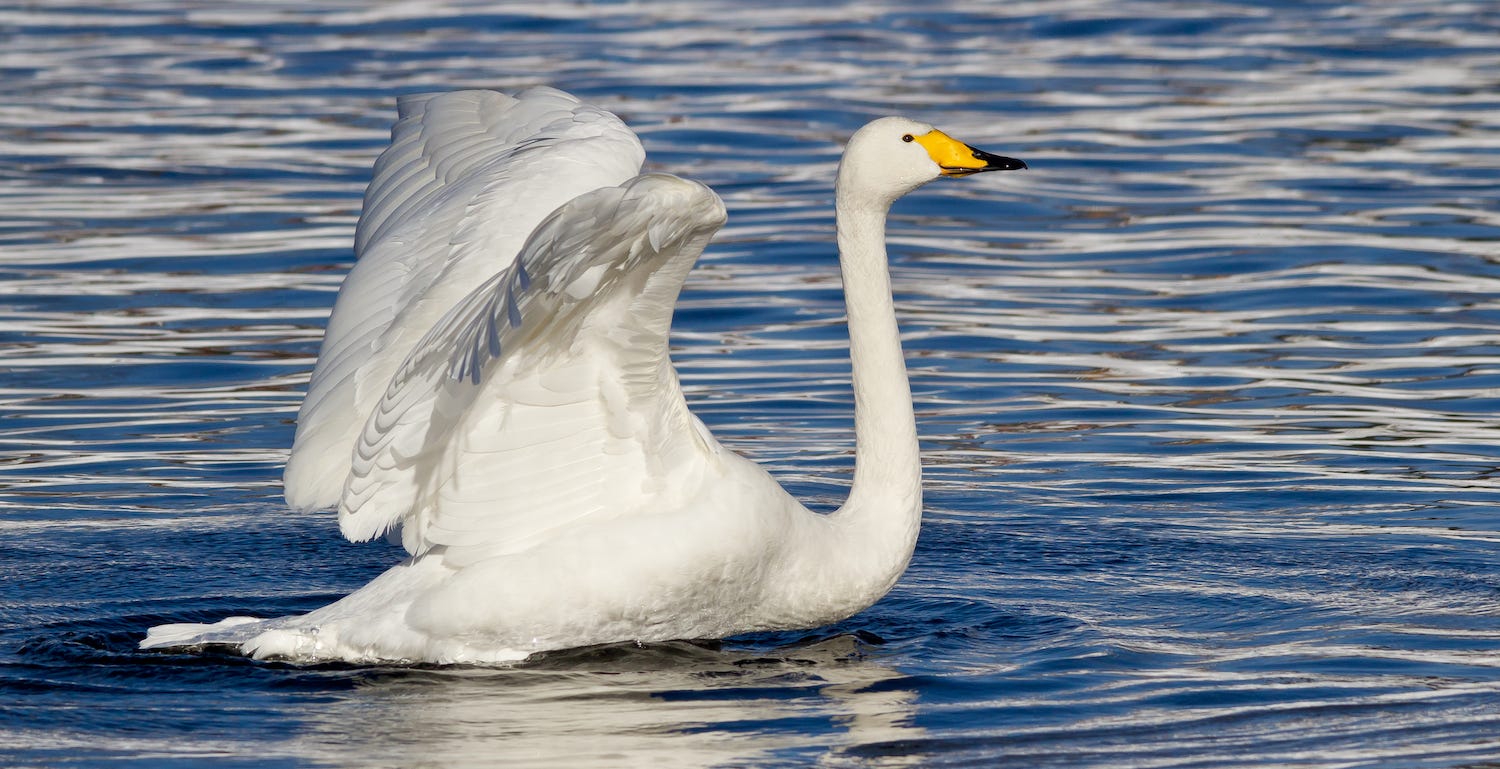
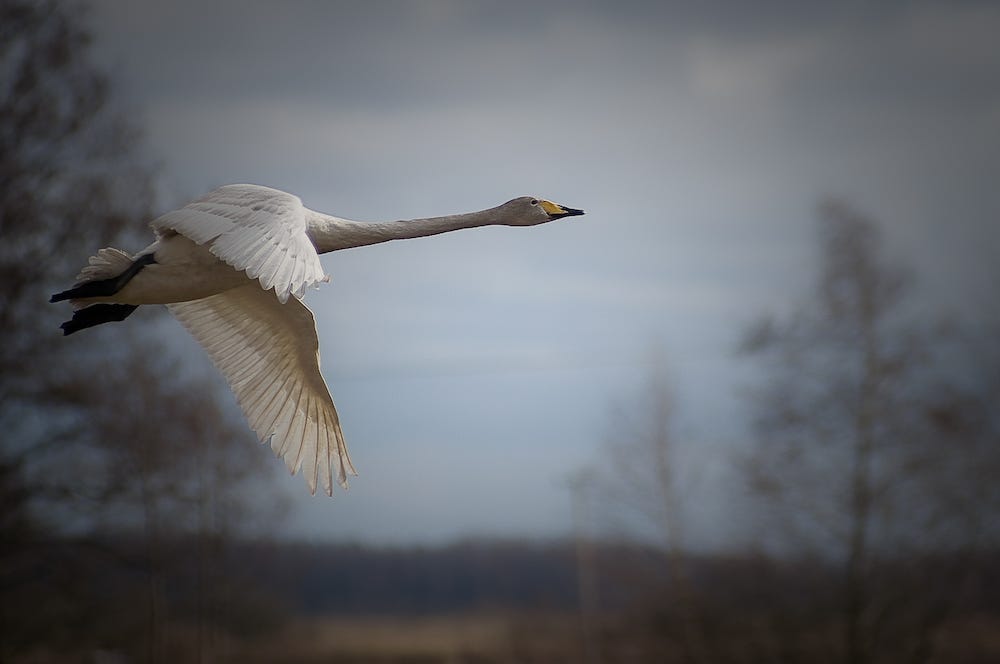
You start to understand more why they associate swans with royalty when you look at a picture like this. They’re so stately and elegant and, well, majestic! If I saw this swan in the wild I would start trying to remember the proper way to bow to a monarch.
That’s especially true for the whooper swan, or “Whoopi” for short. (What do you mean that nickname’s taken?) Because apart from being all pretty and proper, it is ginormous. It’s one of the heaviest flying birds on the planet, and Audubon lists its height range as between 56-70 inches—otherwise known as between 4’8 and 5’10. So at its full height, a whooper cushion (still trying) would be…quite a bit taller than, for instance, me, Jack Mirkinson.
You can experience the voluminousness of this remarkable creature in a lot of places, because it ranges very, very widely:
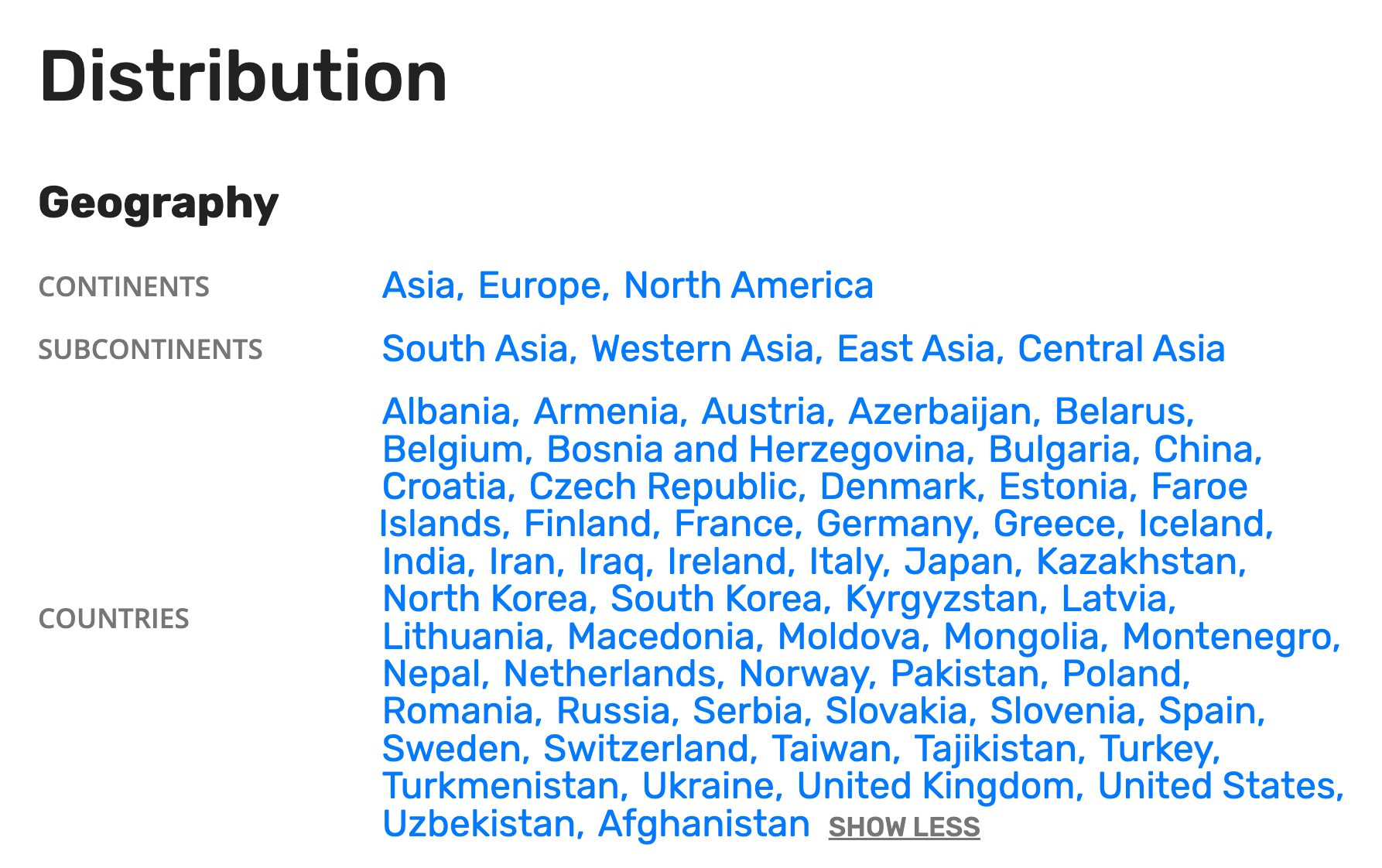
You could start in Japan in the morning, hang out with the swans, and then hop on a plane and finish the day in Albania with some other swans. Wouldn’t that be a wild 24 hours??
OK, some more pics. No, your eyes are not fooling you—there are swans in the middle of those reeds.
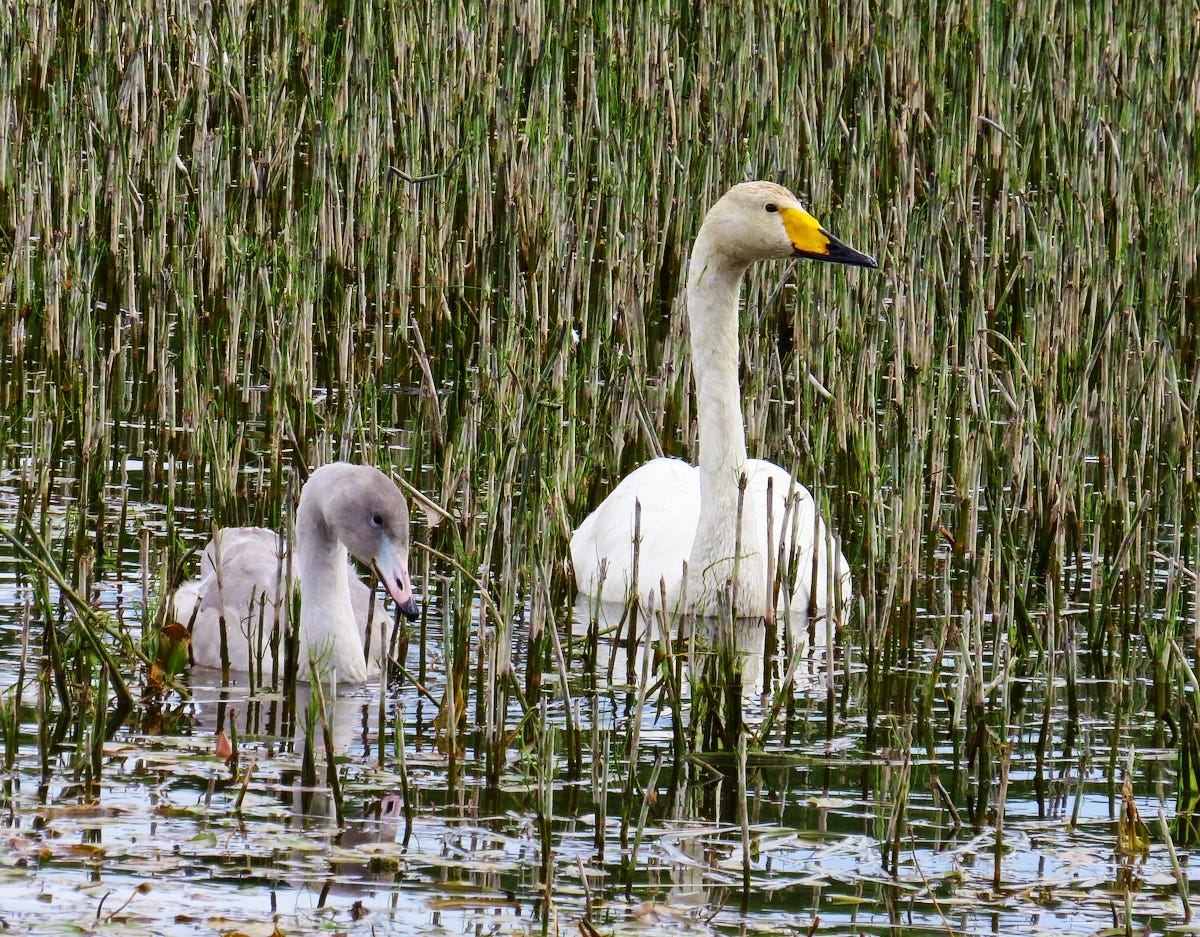
They’re probably chomping down on some of those reeds, since that’s the kind of stuff they eat. And I’m assuming the other swan parent is around somewhere, because whooper swans mate for life and are very family-oriented—for the most part. Here’s a fascinating little snippet from an Icelandic nature museum:
The whooper swan pair has its own territory during the breeding season, which it defends from other swans and birds. The territory is usually close to a lake or a pond where the birds build a large nest for the female to lay 4-6 white eggs. The nest is a large pile of vegetation from the surroundings lined with down and feathers from the birds. Whooper swans often use the same nest if their breeding success has been high in previous years.
The incubation period is 35 days, and the female incubates while the male defends the territory. Both sexes care for the Cygnus, and the family stays together until leaving the country in late fall. Whooper swans pair for life, and couples are mostly loyal to each other. However, divorces and affairs do happen.
“Divorces and affairs do happen”???? What! We’ll save that investigation for another day. Back to the pics.
Here are some swans in Iceland. I think this is the definition of a “swan lake”?
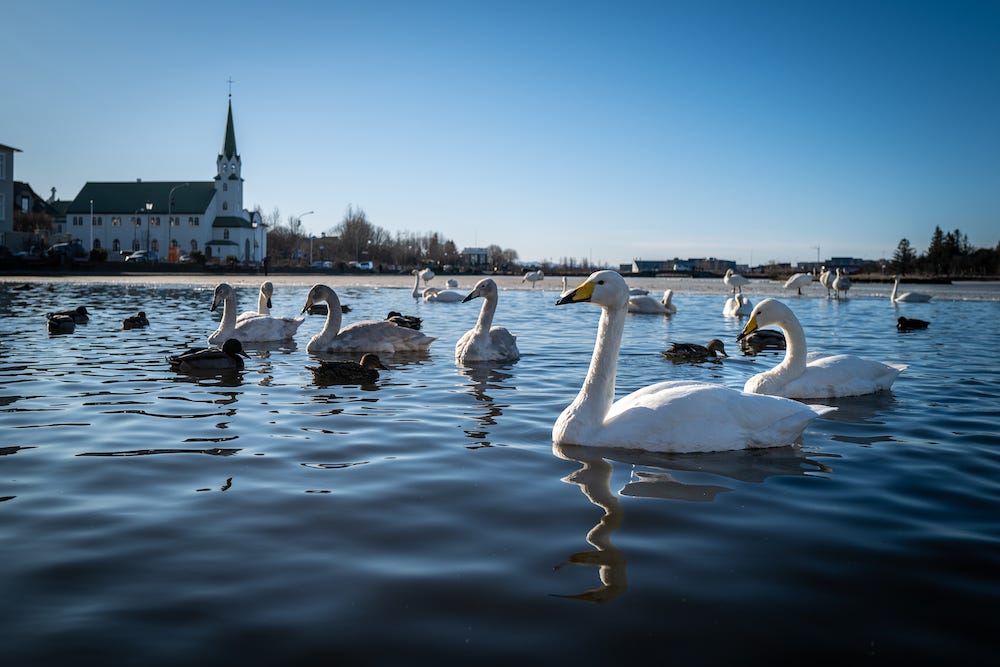
I mean….
Now the part we’ve all been waiting for: the audiovisual element. The whooper swan gets its name from its very loud and distinctive honking cry, which I guess people think sounds like “whoop”? Or “hoop?” Anyway, here it is, along with a prime example of the elaborate courtship dance that whoopers engage in.
The bobbing! The weaving! Priceless. They also do it on land.
But this video might be my favorite, because it shows a single swan taking flight. Just listen to the thunderousness that erupts when its wings hit the water. You’d think it was a helicopter.
Whoop-di-do!!!!!!!!!!!
A reminder: you can check out our complete Bird of the Week list here, and get in touch with your bird suggestions at hello@discourseblog.com.
Absolutely fascinating...up here in the Pacific Northwest, our swan is the Trumpeter, but notice that the Whooper's range also embraces WA...must look out for the species next time out birding!